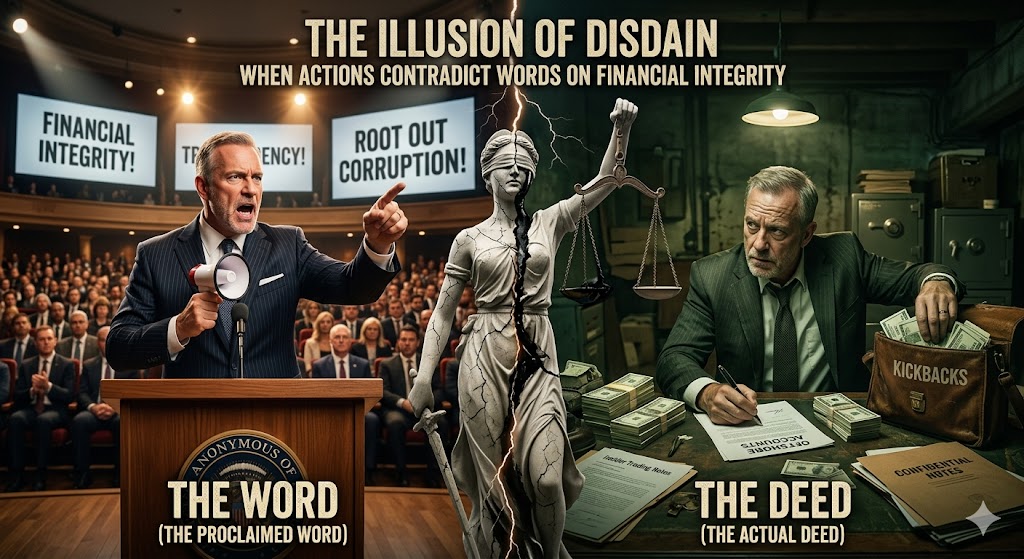
In the realm of public service, words carry weight, but actions carry consequences. When a prominent political figure, particularly one who has held the highest office, publicly disavows certain financial practices while their family members engage in them, it raises serious questions about transparency, ethics, and the very integrity of our financial systems. The recent focus on Donald Trump’s alleged involvement and his family’s investments in areas like prediction markets, the stock market, and cryptocurrency, all while decrying such activities, paints a concerning picture of a potential “money grab” that is both unconstitutional and illegal.
The core of the issue lies in the apparent contradiction between public pronouncements and private actions. If a leader expresses disdain for certain financial instruments or markets, yet their close associates or family members are actively profiting from them, it creates an environment ripe for suspicion. This is not merely a matter of hypocrisy; it strikes at the heart of public trust. When individuals in positions of power appear to benefit from activities they publicly criticize, it erodes the confidence citizens place in their leaders and in the fairness of the economic landscape.
The implications of such a scenario are far-reaching. Engaging in financial activities that are constitutionally questionable or outright illegal, especially when coupled with a public stance of disapproval, suggests a deliberate attempt to circumvent established laws and ethical boundaries. This can manifest in various ways: manipulating markets for personal gain, exploiting loopholes for illicit profits, or leveraging insider knowledge for unearned wealth. The very fabric of a just financial system relies on the principle that everyone plays by the same rules, and that those in power are held to the highest standard.
When these alleged actions involve the stock market or the burgeoning world of cryptocurrency, the stakes are even higher. These are sectors that significantly impact the economic well-being of millions. Any perceived manipulation or unconstitutional enrichment from these areas can have devastating ripple effects, destabilizing markets and disproportionately harming ordinary citizens who invest their hard-earned savings. The idea that such activities could be part of a deliberate “money grab” by those in or near power is not just a political talking point; it is a serious accusation that demands thorough investigation and accountability.
Furthermore, the suggestion that these actions should be considered in the context of impeachment proceedings is a natural progression of such concerns. Impeachment is a mechanism designed to address serious misconduct by public officials. If evidence emerges that a former president or their associates have engaged in illegal or unconstitutional financial activities for personal enrichment, it directly calls into question their fitness for public trust and their respect for the rule of law. Such behavior, if proven, represents a betrayal of the oath of office and a fundamental disregard for the principles of governance.
In conclusion, the alleged financial dealings that appear to contradict public statements are not just ethically dubious; they carry the potential for illegality and unconstitutionality. The pursuit of personal wealth through questionable means, especially by those who have held the highest public office, undermines the foundations of our democracy and economy. It is imperative that such allegations are rigorously investigated, and that any proven misconduct is addressed through the appropriate legal and political channels, including the serious consideration of impeachment if warranted. The integrity of our financial systems and the trust of the public depend on it.
💬 JOIN THE CONVERSATION
We’ve moved our commenting to Substack for better community discussion. No spam, no trolls — just real readers sharing real thoughts.
👉 Read this article on Substack
👉 Subscribe for early access to every post
👉 Comment & debate with the community


More Stories
The Great AI Hustle & Why Data Centers Won’t Take to the Stratosphere
The Mainframe Never Dies — It Just Gets Hijacked by Enthusiasts
The Mainframe Trap