By Arick West | Sunday, May 18, 2026
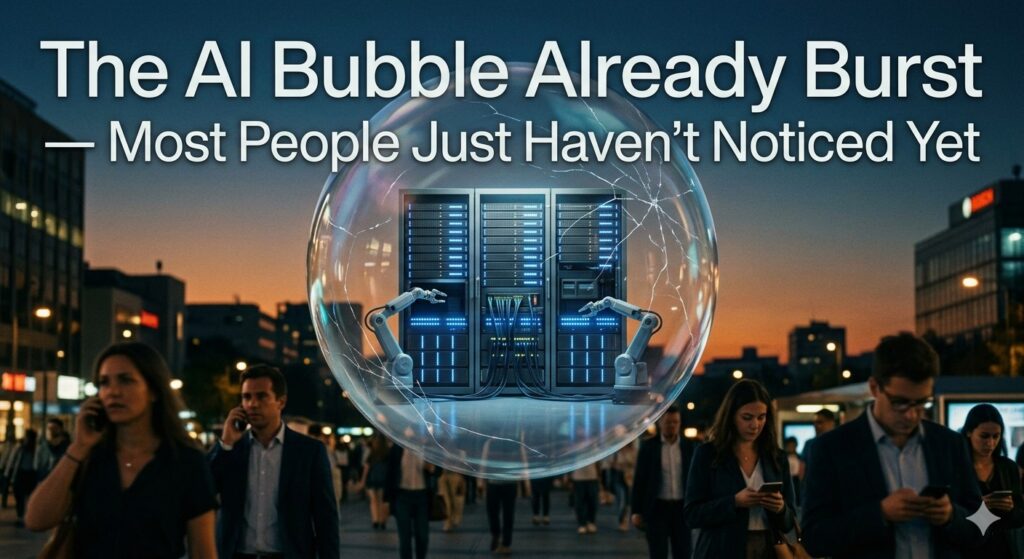
Oh my goodness — the AI bubble actually burst about three months ago. The problem is, hardly anyone noticed.
The moment it popped wasn’t some dramatic Wall Street crash or a viral exposé. It was quiet. It was Apple running out of Mac Minis. It was a piece of software called OpenClaw — which is basically a useless application created by someone in their garage — becoming the number one downloaded video worldwide. And in that moment, everything changed.
What OpenClaw Actually Did
Here’s what happened: OpenClaw disrupted the entire cloud AI model. It pushed thousands — maybe millions — of people from using cloud-based AI services to running AI locally on their own hardware. And once people made that switch, they had a revelation that should have terrified every AI company on the planet: they didn’t need to pay $200, $700, or even $1,000 per month anymore.
Instead, they could make a one-time payment of around $3,000, get 128 gigabytes or more of storage, and run AI right in their homes. For maybe a day’s worth of electricity at most. That setup allowed their entire family to access the AI from anywhere — just log in and go. No monthly subscription. No recurring fees. No cloud dependency.
That was the real moment the bubble burst. But only a few tech enthusiasts noticed. Now, more and more people are adopting this approach every single day. That’s why Mac Minis are no longer available on Apple’s website. They’ve become the next product Apple wants to phase out — because it doesn’t fit their new strategy anymore.
Apple Knows What’s Coming
Here’s where it gets really interesting. Apple has actually designed its own chip specifically to ensure AI will never be cloud-based again. They see the writing on the wall. The future of AI isn’t in massive server farms owned by Microsoft, Google, and Amazon. It’s on your desk. It’s in your home. It’s local.
And that changes everything about the business model. Cloud AI companies have been banking on recurring revenue — monthly subscriptions that add up to thousands of dollars per user per year. If people can buy a machine once and run AI locally for years, that revenue stream evaporates overnight.
We Don’t Even Have Real AI Yet
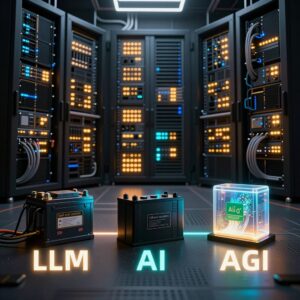
Let’s be clear about something: what we have right now are large language models. LLMs. They are not true artificial intelligence. They are sophisticated pattern-matching systems that are very good at predicting the next word in a sentence. That’s it. That’s the magic trick.
Until genuine AI is developed — something that can actually reason, understand, and operate independently — these large language models will continue to become smaller and smarter. They’ll run on your phone. They’ll run on your laptop. They’ll run on a device that fits in your pocket. And they won’t need the cloud to do it.
This is the part that the hype merchants don’t want you to hear. The AI revolution isn’t going to look like a sci-fi movie. It’s going to look like a quiet shift in where the computing happens. From their servers to your desk.
The Robot Fantasy Needs to Stop
For those who keep predicting a robot-driven world arriving tomorrow or next week — please stop. Just stop.
There are massive hurdles that nobody in the AI hype machine wants to talk about. Insurance liability, for one. Who’s responsible when a robot injures someone? The manufacturer? The software developer? The owner? The legal framework doesn’t exist yet. And it won’t exist for years.
Then there’s the fact that LLMs can’t actually operate robots. They can describe how a robot should move. They can write code that might control a robot. But they cannot, on their own, operate physical machinery in the real world with any reliability.
If LLMs were truly capable of all the things they promise, wouldn’t Elon Musk have already perfected his self-driving car? Wouldn’t Waymo be fully operational in every city by now? Wouldn’t you be able to simply ask your phone every morning to summon a car because AI would be so advanced that driving yourself would be too risky?
Well, that’s not the case yet. And we’re still far from that reality. The gap between what AI companies claim and what their products can actually do is measured in years — maybe decades.
The Money Problem
Meanwhile, companies need to make money. And they’re currently doing so by selling you a dream. The dream of artificial general intelligence. The dream of robots that do your work. The dream of a world where you never have to think again because AI handles everything.
That dream is worth billions in stock prices and venture capital. But dreams don’t pay bills. And when the infrastructure shifts — when people realize they can run capable AI locally for a one-time cost — the entire financial model of the AI industry collapses.
We’re watching it happen right now. The Mac Mini shortage is just the beginning. The real disruption is coming, and it’s coming from people who decided they’d rather own their own AI than rent someone else’s.
The bubble already burst. The only question is how many people will still be holding their cloud AI subscriptions when they realize the emperor has no clothes.
💬 Want to discuss this article?
We’ve moved our conversation to Substack for better community discussion — no bots, no troll farms, just real readers.
→ Join the conversation at arickwest.substack.com
→ Subscribe for early access before articles go live herehttps://arickwest.substack.com

More Stories
The Great AI Hustle & Why Data Centers Won’t Take to the Stratosphere
The Mainframe Never Dies — It Just Gets Hijacked by Enthusiasts
The Mainframe Trap